Temporalities of AI
Conference
- Public event without registration
- Inizio: 17.04.2026 11:00
- Fine: 21.04.2026 16:00
- Relatore: Conference
- Luogo: Villino Stroganoff, Via Gregoriana 22, 00187 Rome and online
- Contatto: katja.hackstein@biblhertz.it
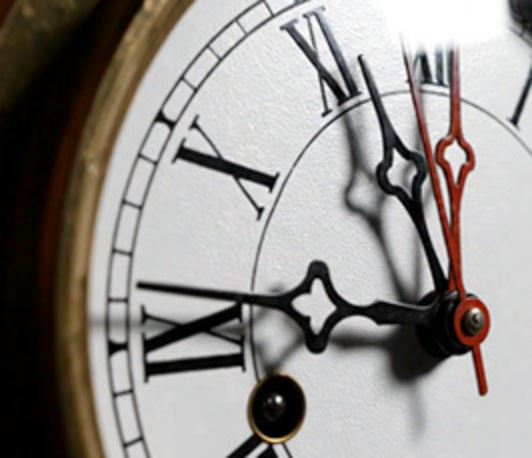
Bringing together researchers and practitioners from disparate disciplines and timezones, this conference develops these questions across six sessions spanning artistic practice, philosophy of the moving image, media theory, visual studies, and critical AI. Contributions address generative AI in audio and video, narratology and large language models, cross-modal temporal structures, neural models of history, the accelerationist logics of contemporary AI, and the temporalities of labour, infrastructure, and extraction. The programme moves from the microtemporal to the historical, from the theoretical to the technical, seeking to surface a layered account of AI as a temporal medium. The conference takes place in a one-day hybrid session in Rome and followed by two online-only days.
After the conference, given very strong interest in the topic, the Machine Visual Culture group will host a monthly one-hour open seminar on the topic.
For updates about the conference and follow-up seminar, including Zoom links, please sign up here: https://groups.google.com/g/temporalities-of-ai/about
SPEAKERS:
Emanuele Andreoli / Mitra Azar
(Independent Researcher), Daniela Cotimbo (Re:humanism), Alessandra Vailati
(Independent Scholar), Audrey Borowski (University of Cambridge), Eryk
Salvaggio (University of Cambridge), Gioacchino Orsenigo (Sant’Anna Institute
in Sorrento), Prudence Castelot (Filmatters), Jens Schröter (University of
Bonn), Alexander Gerner (Universidade Lusófona), Dasha Simons, Sal Hagen and
Louis Ravn (University of Amsterdam), Sabino Di Chio (University of Bari),
Rebecca Uliasz (Case Western Reserve University), Gustavo Nogueira de Menezes
(TORUS / Temporality Lab), Renzo Filinich (University of the Witwatersrand),
Catherine Wieczorek (Georgia Institute of Technology), Leano Di Bello
(University of Turin), Geoff Cox (London South Bank University), Nicolás Marín
Bayona (UCLouvain), Yannick Nepomuk Fritz (University of Basel), Philippe
Boisnard (Université Paris 8), Christopher Michlig (University of Oregon), Francesco
Agnellini (Binghamton University), Nina Beguš and Ramona Naddaff (University of
California, Berkeley), Leonardo Impett (Bibliotheca Hertziana), Alessandro
Trevisan (University of Cambridge)
Conference Days and Times and ZOOM LINKS:
17 April 2026 11:00 - 16:00 (on site and online) : https://eu02web.zoom-x.de/j/7475586652?omn=61658368938
20 April 2026 11:00 - 16:20 (online only) : https://eu02web.zoom-x.de/my/b4005
21 April 2026 11:00 – 16:00 (online only) : https://eu02web.zoom-x.de/my/b4005
PROGRAM
Friday 17 April (in Person & online)
Location: Villino Stroganoff, Via Gregoriana 22, 00187 Rome
Session I: Artistic
Times (11:00–13:00)
Chair: Alessandro Trevisan
11:00–11:20 Welcome
Leonardo Impett, Eryk Salvaggio, Alessandro Trevisan (Machine Visual Culture)
11:20–11:40 Emanuele Andreoli / Mitra Azar (Independent Researcher). The Future-Anterior Temporality of Predictive AI and the Missing Half-Second: Toward a Right to Intermittence
11:40–12:00 Discussion
12:00–12:20 Daniela Cotimbo (Re:humanism). Dyschronic Machines — Temporal Ontologies in Artistic Practices.
12:20–12:40 Alessandra Vailati (Independent Scholar). Anticipation Without Future: Algorithmic Temporality in S.S. Lacuna: Prologue
12:40–13:00 Discussion
Session II:
Technological Times (14:00–16:00)
Chair: Leonardo Impett
14:00–14:20 Donatella della Ratta (John Cabot University). Speculative Violence: The Visual Politics of AI-Powered Authoritarianism
14:20–14:40 Eryk Salvaggio (University of Cambridge). Title TBC.
14:40–15:00 Discussion
15:00–15:20 Gioacchino Orsenigo (Sant'Anna Institute). Servo-Instrumentality and the Temporalities of AI: Technoliberalism and Recursive Colonialism
15:20–15:40 Audrey Borowski (University of Cambridge). AI Temporality through the Lens of Jean Baudrillard
15:40–16:00 Prudence Castelot, Adrian Chuttarsing (Filmatters). Computational opticography - The film as a visual writing of movement in time.
16:00–16:30 Closing discussion
Session III: Visions
of Time (11:00–13:00)
Chair: Giulia Flenghi
11:00–11:20 Jens Schröter (University of Bonn). AI and Abstract Time
11:20–11:40 Alexander Gerner (Universidade Lusófona). Where Does Your Hidden Temporality Lie? The Cut as Limit of Neural Network Video Systems
11:40–12:00 Discussion
12:00–12:20 Dasha Simons, Sal Hagen and Louis Ravn (University of Amsterdam). AI Timescales: Locating and Listening to the Rhythms of Deep Learning
12:20–12:40 Sabino Di Chio (University of Bari). Immediate Creation, Instant Tradition: The Temporal Stakes of Artificial Intelligence
12:40–13:00 Discussion
Session IV:
Compression and Infrastructures of Time (14:00–16:00)
Chair: Eryk Salvaggio
14:00–14:20 Rebecca Uliasz (Case Western Reserve University). Indeterminate Foundation (Models) of History
14:20–14:40 Gustavo Nogueira de Menezes (TORUS / Temporality Lab). Temporal Obscuration: How AI Systems Freeze the Past, Accelerate the Present, and Foreclose Decolonial Futures
14:40–15:00 Discussion
15:00–15:20 Renzo Filinich (University of the Witwatersrand). Unlearning the Mineral Mind: Algorithmic Shadows, Geologic Memory and the Plasticity of Intelligence
15:20–15:40 Catherine Wieczorek (Georgia Institute of Technology), Annabel Rothschild, Bard College. Dead on Arrival: Temporal Mismatch and Phantom Promises of AI Infrastructure
15:40–16:00 Leano Di Bello (University of Turin). BioSyntax: Cultural Time in Suspension within AI Systems
16:00–16:20 Discussion
Session V: Neural
Models of History (11:00–13:00)
Chair: Valentine Bernasconi
11:00–11:20 Geoff Cox (London South Bank University). AI Has No History!
11:20–11:40 Nicolás Marín Bayona (UCLouvain). Latent Times: Neural Networks, Melancholia, and the Historical Fantasy of a Timeless Other
11:40–12:00 Discussion
12:00–12:20 Yannick Nepomuk Fritz (University of Basel). Entextualization Time: Its Models and Medialities Between Human and Machine
12:20–12:40 Philippe Boisnard (Université Paris 8). Towards an Archaeology of the Computational Unconscious of the Present
12:40–13:00 Discussion
Session VI: Time in
Neural Architectures (14:00–16:00)
Chair: Violaine Boutet de Monvel
14:00–14:20 Christopher Michlig (University of Oregon). Asleep and Dreaming: Hypersleep, Defiance, Trans-Species Capitalism, and the Myth of AI Autonomy
14:20–14:40 Francesco Agnellini (Binghamton University). Retrograde Futures: Backpropagation and the Cybernetic Temporality of Neural Networks
14:40–15:00 Discussion
15:00–15:20 Nina Beguš and Ramona Naddaff (University of California, Berkeley). Polychronic Models
15:20–15:40 Leonardo Impett, Eryk Salvaggio, Alessandro Trevisan (Machine Visual Culture). Closing Remarks
15:40–16:00 Discussion
Scientific Organization: Leonardo Impett, Eryk Salvaggio and Alessandro Trevisan
Image by Eryk Salvaggio