Museums, Collections and Research: Data- and Digital-Driven Approaches in a European Perspective for Cultural Heritage
Panel in Italian and English
- Pre-registration is required
- Data: 29.05.2026
- Ora: 16:00 - 18:00
- Relatore: Panel in Italian and English
- Luogo: Villino Stroganoff, Via Gregoriana 22, 00187 Rome
- Contatto: research@europeana.eu
Infrastructures for data, understood as vehicles of knowledge and as a foundation for generating new knowledge, are above all infrastructures for people and institutions, aiming to support the work of the former and strengthen the impact of the latter through technology and digital innovation. This panel focuses on museums not only as data producers but also as potential connectors of data, and on their interrelations with the broader research landscape in the context of open science. The speakers will explore the opportunities opened up by digital collections, including cultural heritage in 3D, and by Artificial Intelligence applied to the study of images and objects. More in general, they will talk about the data produced within and around museums for the potential benefit of wider research communities and publics — from the humanities to conservation and restoration, up to heritage science.
The first part of the panel will provide an overview of the most significant experiences that emerged from the successful conference series: The Art Museum in the Digital Age, at the Belvedere Museum, Vienna. The second part will focus on the reciprocal relationship between Artificial Intelligence and visual culture, including its influence within the field of Digital Art History, as well as on the potential applications of Artificial Intelligence to the research data that underpin Technical Art History. The third and final part will seek to stimulate reflection on the potential of digital collections in supporting the mission of museums as research institutions, between the national dimension of the Italian Digital Library and the European infrastructures for cultural heritage, taking the Capodimonte Museum in Naples as a representative example.
REGISTRATION LINKS
Update: Since a national strike has been announced, we have adjusted our initial plans, and we will run the event in a hybrid form to accommodate remote attendance too. Those who have already registered for in-person attendance and are no longer able to join in person are kindly asked to deregister and get a spot for online attendance by registering through the second link. The speakers will deliver their presentations at/ from Bibliotheca Hertziana - Villino Stroganoff and will welcome those who can attend in person.
For in-person attendance - Please register at: https://pretix.eu/Europeana-Foundation/museums2026/
For online attendance - Please register at
https://pretix.eu/Europeana-Foundation/museums2026online/
______
Speakers
Alba Irollo (chair and organiser), coordinator of the research-related area of the European data space for cultural heritage, which liaises the cultural heritage sector with European research infrastructures and academia, fostering a ‘Collections as Data’ approach, and contributes to the development of the European Collaborative Cloud for Cultural Heritage.
Christian Huemer, director of the Belvedere Research Centre at the Belvedere Museum in Vienna, which, since 2019, has organised the international annual conference The Art Museum in the Digital Age. From 2008 to 2017, he directed the department of Collecting & Provenance at the Getty Research Institute in Los Angeles. He is editor-in-chief of the Brill book series Studies in the History of Collecting & Art Markets.
Leonardo Impett, associate professor in Digital Humanities at the Faculty of English, University of Cambridge, and Bye-Fellow in Digital Humanities at Selwyn College, Cambridge. He is also the Research Group Leader at the Bibliotheca Hertziana in Rome, for the project: Machine Visual Culture: Artificial Intelligence and the History of Seeing.
Erma Hermens, director of the Hamilton Kerr Institute for Easel Painting Conservation and the Conservation and Science division at the Fitzwilliam Museum, University of Cambridge. Previously, she held a joint professorship in Studio Practice and Technical Art History at the University of Amsterdam and the Rijksmuseum, Department of Conservation & Science. She has recently been awarded a grant from Schmidt Sciences for the project: MakingAI: AI-Driven Integration of ‘Messy’ Data in Technical Art History.
Gloria Antoni, official-art historian at the Italian Ministry of Culture, currently curator of 16th-century art at the Capodimonte Museum in Naples, where she is also in charge of the museum catalogue and digitisation projects.
Bianca Hermanin de Reichenfeld, official-art historian at the Italian Ministry of Culture, currently responsible for communication at the Central Institute for the Digitisation of Cultural Heritage, in Rome, which oversees the National Plan for the Digitisation of Cultural Heritage (PND).
Please register at: https://pretix.eu/Europeana-Foundation/museums2026/
For any information: research@europeana.eu
This event has been organised by the Europeana Foundation, with the support of the Europeana Research Community, and is hosted by the Machine Visual Culture research group at the Bibliotheca Hertziana.
_____
Agenda
Please note - It is customary to start 10 minutes later in Italy. If you invite people, please make sure they register.
16:10 - 16:25 Alba Irollo
16:25 - 16:40 Christian
16:40 - 16:45 Alba Irollo
16:45 - 17:00 Leonardo Impett
17:00 Alba Irollo (to introduce Erma Hermens)
17:00 - 17:15 Erma Hermens (online)
17:15 - 17:20 Alba Irollo
17:20 - 17:40 Bianca Hermanin de Reichenfeld, Gloria Antoni
17:40 - 17:45 Alba Irollo
17:45 - 18:00 Q/A with the audience (Joe Padfield, senior scientist at the National Gallery in London, may join and ask some questions)
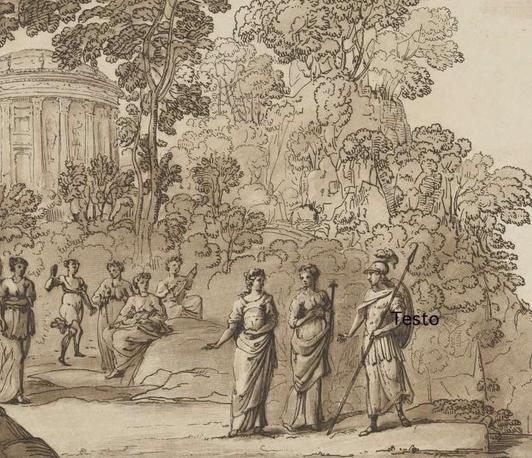
Image: Copyright wording for the picture: John Boydell, [Der Parnass mit den Musen], Herzog Anton Ulrich
Museum, Germany, CC BY-NC-SA. Available on Europeana.eu.