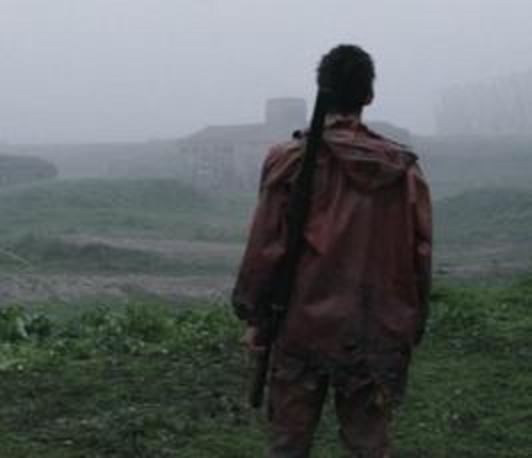
Paesaggi della catastrofe: Il seme dell’uomo (M. Ferreri, 1969)
Ciclo di Film Seminars
- Evento pubblico senza registrazione
- Beginn: 17.11.2026 18:00
- Ende: 18.11.2026 12:00
- Vortragende(r): Ciclo "Paesaggi della catastrofe"
- Ort: Villino Stroganoff, Via Gregoriana 22 e Palazzo Zuccari, Via Gregoriana 28
- Kontakt: rossi@biblhertz.it
Nel cinema italiano, il
futuro ha spesso il volto di luoghi già conosciuti. Città trasformate, aree
industriali contaminate, spiagge deserte, territori sommersi o abbandonati
fanno da scenario a società in crisi, catastrofi avvenute o imminenti, realtà
nelle quali le condizioni del presente sembrano essere giunte alle loro
conseguenze estreme. È in questi paesaggi che, a partire dalla metà degli anni
Sessanta, si è delineato un immaginario distopico capace di attraversare epoche
e sensibilità differenti.
Modernizzazione, minaccia
bellico-nucleare e sfruttamento delle risorse naturali emergono così, in
momenti diversi, mediante spazi che registrano le inquietudini di un’epoca e le
mutazioni sociali, economiche e ambientali del paese.Il percorso muove dalla Roma
ipermoderna e spettacolarizzata di La decima vittima (E. Petri, 1965),
dove la metropoli del domani traduce nelle architetture e nell’organizzazione
urbana le logiche del consumo e dello spettacolo, per passare alla spiaggia
maremmana, sospesa e apocalittica, di Il seme dell’uomo (M. Ferreri, 1969),
rifugio a seguito di una devastazione di portata globale. A oltre mezzo secolo di
distanza, Mondocane (A. Celli, 2021) e La terra dei figli (C.
Cupellini, 2021) guardano a due territori profondamente segnati dall’azione
umana: la Taranto industriale, tra inquinamento e marginalità sociale, e le
aree fluviali e palustri del delta del Po, trasfigurate dalla guerra e dal
collasso ambientale.La distanza temporale tra i
quattro film selezionati consente di osservare come si ridefiniscano le forme
della catastrofe e le modalità attraverso cui essa si inscrive nel paesaggio.A partire da contesti
geografici e morfologici fortemente differenziati, il ciclo mette quindi in
relazione le prime articolazioni di uno sguardo distopico durante e subito dopo
il boom economico con le sue riemersioni contemporanee, segnate da una nuova
centralità della crisi ecologica.
Si tratta di una serie di seminari di approfondimento organizzati in forma di dibattito a partire dall’introduzione al film la sera precedente. Si lavorerà a partire da una selezione di film, facendo riferimento a un corpus più ampio con cui poter dialogare.
Curatori: Tanja Michalsky, Matteo Santandrea
Organizzazione scientifica: Adrian Bremenkamp,
Andrea Gelardi, Malvina Giordana, Júlia Pérez Gonell
PROGRAMMA DEL CICLO DI FILM SEMINAR: Paesaggi della catastrofe
FILM SEMINAR 1
27 ottobre 2026 La decima
vittima (E. Petri, 1965) Villino Stroganoff, dalle ore 18:00 alle 20:00.
28 ottobre 2026 Analisi e discussione, Sala
riunioni/Palazzo Zuccari, dalle ore 10:00 alle 12:00.
FILM SEMINAR 2
17 novembre 2026 Il seme
dell’uomo (M. Ferreri, 1969) Villino Stroganoff, dalle ore 18:00 alle
20:00.
18 novembre 2026 Analisi e discussione, Sala
riunioni/Palazzo Zuccari, dalle ore 10:00 alle 12:00.
FILM SEMINAR 3
1° dicembre 2026 Mondocane (A.
Celli, 2021) Villino Stroganoff, dalle ore 18:00 alle 20:00.
2 dicembre 2026 Analisi e discussione, Sala
riunioni/Palazzo Zuccari, dalle ore 10:00 alle 12:00.
FILM SEMINAR 4
12 gennaio 2027 La terra dei
figli (C. Cupellini, 2021) Villino Stroganoff, dalle ore 18:00 alle 20:00.
13 gennaio 2027 Analisi e discussione, Sala
riunioni/Palazzo Zuccari, dalle ore 10:00 alle 12:00.
ENGLISH VERSION
Landscapes of Catastrophe
Every
era imagines catastrophe through the lens of its own anxieties. Dystopian
cinema has made it a privileged means of interrogating the present through the
anticipation of the future. The series presented by the Bibliotheca Hertziana
traces some of its manifestations in Italian cinema, from the mid-1960s to the
present day.
In
Italian cinema, the future has often taken the shape of familiar places.
Transformed cities, contaminated industrial areas, deserted beaches, and
flooded or abandoned territories provide the setting for societies in crisis,
catastrophes that have already occurred or are yet to come, and realities in
which the conditions of the present seem to have reached their most extreme
consequences. It is within these landscapes that, since the mid-1960s, a
dystopian imaginary has emerged, spanning different periods and sensibilities.
Modernization,
the threat of nuclear war, and the exploitation of natural resources thus
emerge, at different historical moments, through spaces that register the
anxieties of their time and the social, economic, and environmental changes
affecting the country.
The
series begins with the hypermodern, spectacularized Rome of La decima
vittima (E. Petri, 1965), where the metropolis of the future translates the
logics of consumption and spectacle into its architecture and urban
organization, before moving to the suspended, apocalyptic beach landscape of
the Maremma in Il seme dell’uomo (M. Ferreri, 1969), a refuge in the
aftermath of a catastrophe on a global scale. More than half a century later, Mondocane
(A. Celli, 2021) and La terra dei figli (C. Cupellini, 2021) turn to two
territories profoundly marked by human activity: industrial Taranto, shaped by
pollution and social marginalization, and the riverine and marshland areas of
the Po Delta, transfigured by war and environmental collapse.
The
temporal distance separating the four selected films makes it possible to
observe how the forms of catastrophe are redefined, along with the ways in
which catastrophe becomes inscribed in the landscape.
Drawing on markedly
different geographical and morphological contexts, the series thus brings the
early articulations of a dystopian gaze during and immediately after the
economic boom into dialogue with its contemporary re-emergences, marked by the
renewed centrality of the ecological crisis.
This is a series of in-depth seminars organised as discussions following the previous evening’s introduction to and screening of the film. The seminars will focus on a selection of films while also drawing on a broader corpus of works for discussion.
Curators: Tanja
Michalsky, Matteo Santandrea
Scientific Organization:
Adrian Bremenkamp, Andrea Gelardi, Malvina Giordana, Júlia Pérez Gonell
PROGRAMME OF THE FILM SEMINAR SERIES: Landscapes of Catastrophe
FILM SEMINAR 1
27 October 2026 La decima
vittima (E. Petri, 1965) Villino Stroganoff, from 18:00 to 20:00.
28 October 2026 Analysis and discussion, Meeting Room, from 10:00 to 12:00.
FILM SEMINAR 2
17 November 2026 Il seme
dell’uomo (M. Ferreri, 1969) Villino Stroganoff, from 18:00 to 20:00.
18 November 2026 Analysis and discussion, Meeting Room, from 10:00 to 12:00.
FILM SEMINAR 3
1 December
2026 Mondocane (A. Celli, 2021) Villino Stroganoff,
from 18:00 to 20:00.
2 December 2026 Analysis and discussion, Meeting Room, from 10:00 to 12:00.
FILM SEMINAR 4
12 January 2027 La terra dei
figli (C. Cupellini, 2021) Villino Stroganoff, from 18:00 to 20:00.
13 January 2027 Analysis and discussion, Meeting Room, from 10:00 to 12:00.