Global Power/Local Memory: Funeral Monuments on the Iberian and Italian Peninsulas during the Spanish-Habsburg Rule
Workshop
- Public event without registration
- Beginn: 12.11.2026
- Ende: 13.11.2026
- Vortragende(r): Workshop
- Ort: Villino Stroganoff, Via Gregoriana 22, 00187 Rome
- Kontakt: raffaele.rossi@biblhertz.it
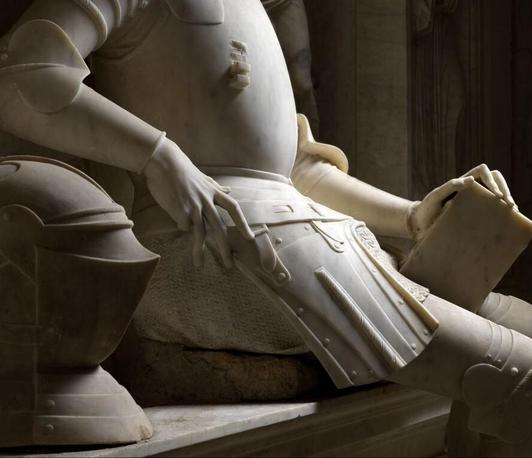
In the 62 years since Erwin Panofsky published his “Four Lectures” on tomb sculpture in 1964, art history has produced a vast and increasingly complex body of research. The workshop seeks to question recent methodological assumptions and to open up new perspectives on the study of funerary monuments by situating them within a broader, culturally and socially heterogeneous context: that of the Mediterranean Spanish Habsburg Empire. While individual studies of funerary monuments exist for the Iberian Peninsula, Naples, Milan, and Portugal, the transnational dimension of memorial practices has received comparatively little attention. By bringing together research on monuments, patrons, artists, materials, and practices across these different territories, the workshop aims to explore the networks, transfers, and processes of exchange that shaped early-modern funerary culture across the Western Mediterranean.
Program
Thursday, 12 November 2026
09:30–10:00
Anna
Magnago Lampugnani (Cologne), Ivo Raband (Hamburg) – Introduction
10:00–11:30 Session 1
Chair: Johannes Röll (Rome)
Tanja Michalsky (Rome) – Memory
and Representation: New Developments in Research on Tombs?
Marie-Lou Lanier (Tours) – Funeral Monuments
of the Spanish-Habsburg Era Through the Prism of Their Architecture: Another
Perspective
11:30–12:00 Coffee Break
12:00–13:30 Session 2
Chair: Adrian Bremenkamp (Rome)
Rebecca Teague (Riverside) – An Unlikely
Precedent: Isotta degli Atti and the Origins of a Global, Female
Self-Fashioning
José-Luis Vega (Rome) – United by Stone Even
in Death: The Tombs of the Spouses Between the Iberian Peninsula and Naples
13:30–14:30 Lunch Break
14:30–16:00 Session 3
Chair: Ivo Raband (Hamburg)
Luis Javier Cuesta-Hernández (Madrid) – The Tomb
and Funerary Chapel of the Sotelo Cisneros Family in Zamora: Global and Local Renaissance
in Sixteenth Century Spain (‘Conversos’ and ‘Indianos’?)
Teresa Soley (Cambridge) – “Si vera est fama”:
King Sebastião’s Tomb and the Iberian Union
16:00–16:30 Coffee Break
16:30–18:00 Session 4
Chair: Anna Magnago Lampugnani (Cologne)
Angelo Maria Monaco (Venice) – Rhetorical
Burials in Salento During the Habsburg Era: From Macro- to Microhistory
Letizia
Gaeta (Lecce) – “Temi
umanistici” nella scultura funeraria napoletana: Spiritelli e bambini, dal
sepolcro Bonifacio ad altri esempi
Friday, 13 November 2026
9:30–11:00 Session 5
Chair: Tanja Michalsky (Rome)
Giacomo Perrone (Lecce) – Tomb Slabs of the
Spanish Community in Early Sixteenth‑Century Naples
Alessandro Grandolfo (Lecce) –
Funerary Monuments with Kneeling Effigies in the Kingdom of Naples (Fifteenth
to Seventeenth Centuries): Models, Function and Meaning in an International
Perspective
11:00–11:30 Coffee Break
11:30–12:15 Session 5 (continued)
Chair: Tanja Michalsky (Rome)
Anna Chiara Giusa (London) – Carving
Alliances: Angelo Balsamo's Funerary Monument (1512–1514) in Messina
12:15–12:30
Anna Magnago Lampugnani (Cologne), Ivo Raband
(Hamburg) – Closing Remarks
Scientific Organization: Anna Magnago
Lampugnani, Tanja Michalsky, Ivo Raband
Image: Giovanni da Nola, Detail Tomb Monument for Jacopo
Sanseverino, Cappella Sanseverino, 1538-1553, SS. Severino e Sossio, Naples © Bibliotheca Hertziana -
Istituto Max Planck per la storia dell’arte / Archivio dell’Arte - Luciano e
Marco Pedicini