The Judge and the Conservator: Carlo Ginzburg and Conservation
Capstone Keynote lecture to Lacuna: Conservation, Law, and the Ethics of the Incomplete conference
- Public event without registration
- Datum: 04.12.2026
- Uhrzeit: 18:00 - 19:30
- Vortragende: Peter N. Miller
- Ort: Villino Stroganoff, Via Gregoriana 22, 00187 Rome and online
- Kontakt: Editorial-LMG@biblhertz.it
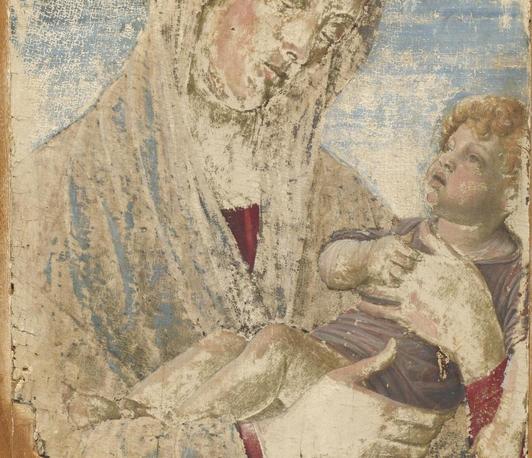
The late Carlo Ginzburg
(1939–2026) explicitly addressed conservation from time to time in his work, as
in his essay on the restoration of past sound. But this paper argues that
Ginzburg’s “The Judge and the Historian,” which does not name conservation, actually
offers something important for conservators to reflect on. For, like the
historian, the conservator must understand how an object has changed over time;
like the judge, the conservator must also decide and act. The comparison is not
far-fetched: the Encyclopédie listed “judge-conservators” among its legal
offices. The scientists who study objects, by contrast, are closer to
historians: they too study change over time, but their archive is the object
itself, and their language that of molecules and atoms. Drawing on Ginzburg’s
readings of Marc Bloch, Arsenio Frugoni, and Siegfried Kracauer, the paper
explores what conservation and historical scholarship share: the reformulation
of questions, the layered history of evidence, the “game of scales” of microhistory,
and techniques for marking uncertainty, from the historian’s “perhaps” to the
restorer’s tratteggio. Even the condition report, the most common form of
conservation writing, can be read as a microhistory: one object, one narrative,
one writer, gathered over time into an object’s biography. And Bloch’s idea of
“permeability” to the beliefs of others suggests that imagination and empathy,
virtues rarely associated with conservators, belong to their practice too. The
paper argues that conservation belongs among the human sciences, and that
judging is closer to the work of both historians and conservators than either
usually admits.
Peter N. Miller is President of the American Academy in Rome. He was a professor and dean at the Bard Graduate Center in New York City between 2001 and 2023. He is the author of a series of books on the early seventeenth-century antiquarian, Nicolas Fabri de Peiresc, on the history of antiquarianism, and on the modern study of objects as evidence. He co-curated Dutch New York Between East and West: The World of Margarieta van Varick (BGC, 2009), Richard Tuttle: What Is the Object? (BGC, 2022) and Conserving Active Matter (BGC, 2022). His most recent work rethinks conservation (On Conservation as a Human Science, Princeton University Press, 2026), explores historical thinking (The Weather on 9/9/01: Newspaper Weather Maps and History, MER Books, 2024) and defines the importance of research (Research: A Manifesto, Princeton University Press, 2026). He has been the recipient of fellowships from the National Endowment for the Humanities, the John Simon Guggenheim Foundation, and the John D. and Catherine T. MacArthur Foundation.
Please follow the event online: https://vimeo.com/event/6330709
Scientific Organization:Francesca Borgo and the Lise Meitner Group